

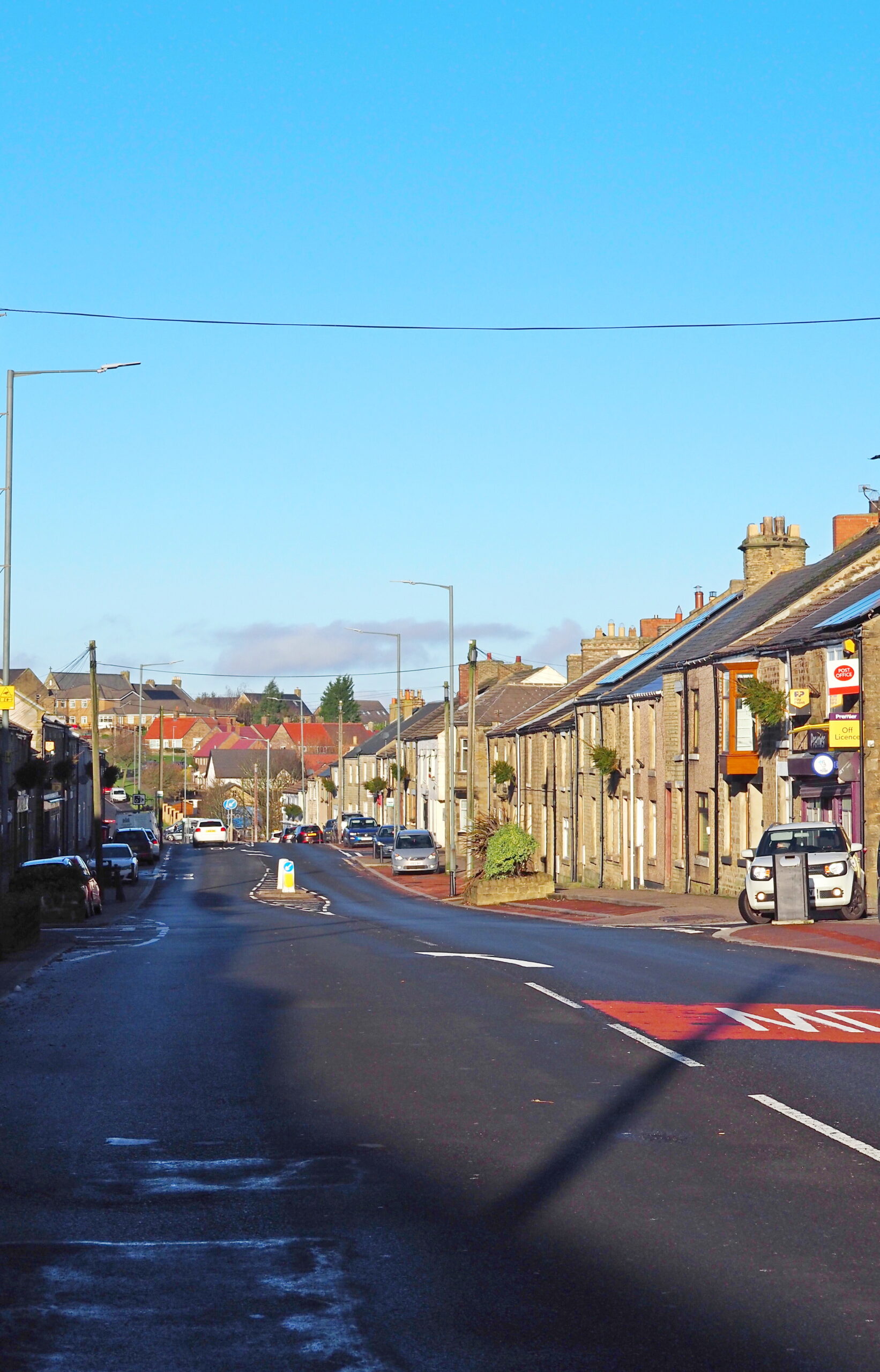
Tow Law
Tow Law, situated between Thornley and the A68 took its name from the Old English words tot hlaw meaning ‘lookout mound’, which was the name of a house which stood there before the iron works and the village were built. The river Deerness rises from a spring on the eastern edge of the town.
The parish church of St Philip and St James was completed in 1869. There is also a Catholic church – St Joseph’s and two primary schools.
Cannon balls fired during the Crimean War of 1853 were made from Tow Law Iron, and the small hamlet to the east of the town called Inkerman takes its name from the battle of Inkerman. The Weardale Iron and Coal Company was established here in 1845, building blast furnaces and opening Inkerman and West Thornley collieries, providing work for both the local population and further afield, many from Ireland.
A railway line, run by the Stockton and Darlington Railway Company, linked Crook, Bishop Auckland and Consett via Tow Law. The last passenger train ran in the 1960s and the line closed in 1965. The Alpine Way Estate was built on the site of the station and sidings.
A 2.3 megawatt wind farm of three 50 metre turbines was built in 2001. The town has its own football club and is mentioned in the Mark Knopfler song ‘Hill Farmer’s Blues’ from his album ‘The Ragpickers’ Dream’.